
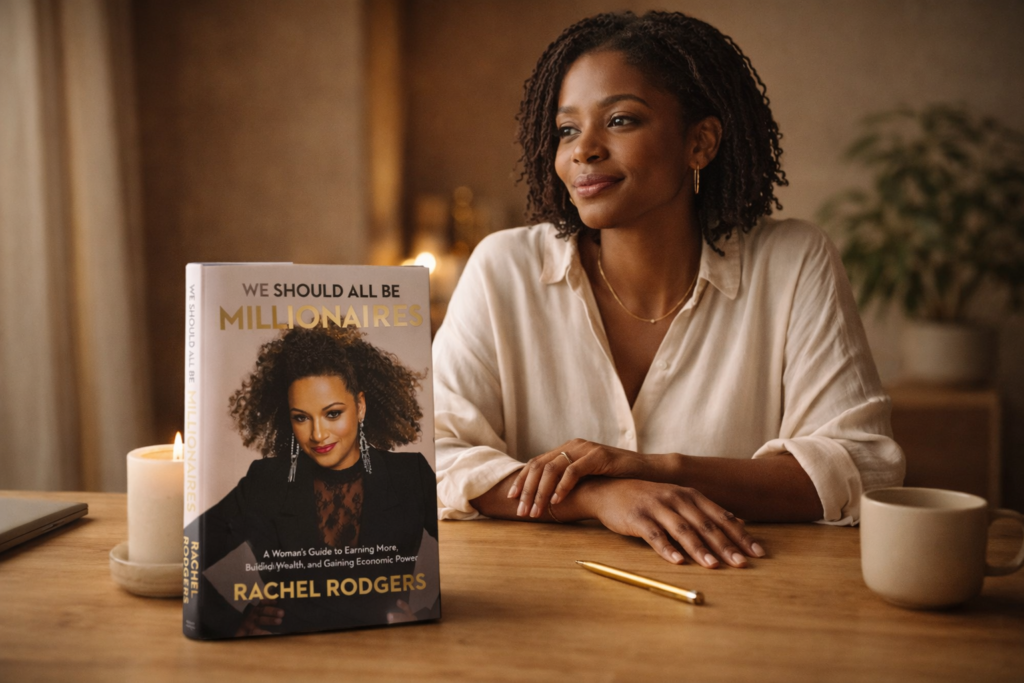
You did not grow up learning how to be wealthy. Nobody sat you down and said, “Here’s how money actually works, and here’s your seat at the table.” Most of us learned money from watching our parents stretch it, pray over it, or silently stress about it. And then we walked into adulthood carrying all of that — and wondering why building wealth feels so far away.
That is exactly why We Should All Be Millionaires by Rachel Rodgers belongs on your bookshelf.
This is one of the most important financial books for Black women building wealth that I have read in the last decade of curating the Real Women Read monthly list. And I do not say that casually.
Why This Book Made It to the Real Women Read List
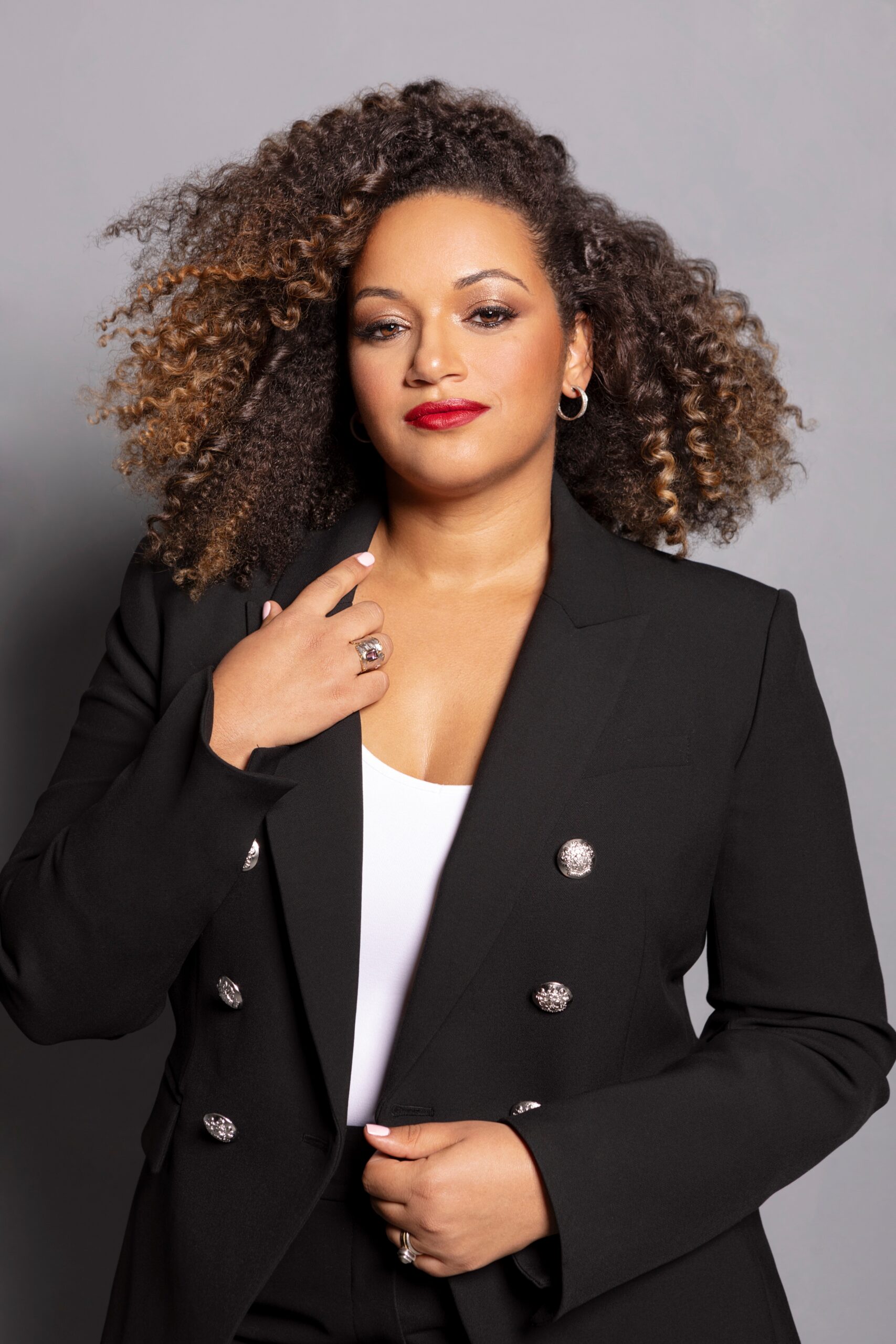
Every month, the Real Women Read circle chooses one book for personal growth, one for professional growth, and one for financial growth. When I selected We Should All Be Millionaires as my financial pick, I had heard the buzz. Early social media reviews were already calling it “the Rich Dad, Poor Dad for Black women.”
Having read Rich Dad, Poor Dad, I want to be clear: Rachel Rodgers does not need that comparison. This book stands on its own, firmly, as a real and factual guidebook for any woman — especially any minority woman — who is ready to stop surviving and start building something.
What We Should All Be Millionaires Actually Covers
This is not a “cut your lattes and clip your coupons” kind of book. Rachel Rodgers is not interested in helping you shrink. She is interested in helping you expand.
Here is what she walks you through:
The mindset work is grounded in history, not just positivity. Rodgers does not just tell you to “think wealthy.” She shows you — with receipts — how society systemically created a limitation mindset in women, and particularly in women of color. Understanding why you think about money the way you do is the first step to changing it.
She gives you the actual roadmap. Rachel shares her own story of going from a law clerk earning $41,000 with a 480 credit score to building a multi-million dollar company. Then she turns that story into a step-by-step system you can follow. Not a vague vision board exercise. A road map.
She addresses the wealth gap directly. Black women earn approximately 62 cents to every white man’s dollar. That is not a mindset problem. It is a systemic one. Rodgers names it, refuses to minimize it, and then gives you tools to build wealth anyway — not in spite of the reality, but with full awareness of it.
She helps you build what she calls your million-dollar squad. Who is around you matters enormously when you are trying to grow financially. She addresses this with practical intention.
She includes her $10K in 10 Days Challenge — a concrete strategy that hundreds of women have completed with real results.
Who This Book Is For
This book is for you if:
- You feel like you are always working hard but never actually getting ahead
- You have a complicated relationship with money rooted in how you grew up
- You are building a business or want to, and you need permission to charge what you are worth
- You have absorbed the message that wanting wealth is greedy, selfish, or somehow unfaithful — and you are ready to unlearn that
- You want financial advice that actually sees you
This book is not for you if you are looking for a detailed investment guide with stock strategies and portfolio breakdowns. That is not what this is. This is about the foundation — the thinking, the positioning, the decisions — that has to come before any of that lands.
What I Am Still Thinking About
The thing that has stayed with me the longest is Rodgers’ framing that earning more money is not selfish. It is, in her words, a revolutionary act that brings the economy into balance and creates a better world for all of us.
As Black women, we are often the ones pouring out — financially, emotionally, practically. We support extended family, our communities, our churches, our friends. The idea that building your own wealth is actually part of how you serve the people you love — that reframe is still working in me.
I recommended this book to my coaching clients the same month I read it. That is the highest endorsement I can give.
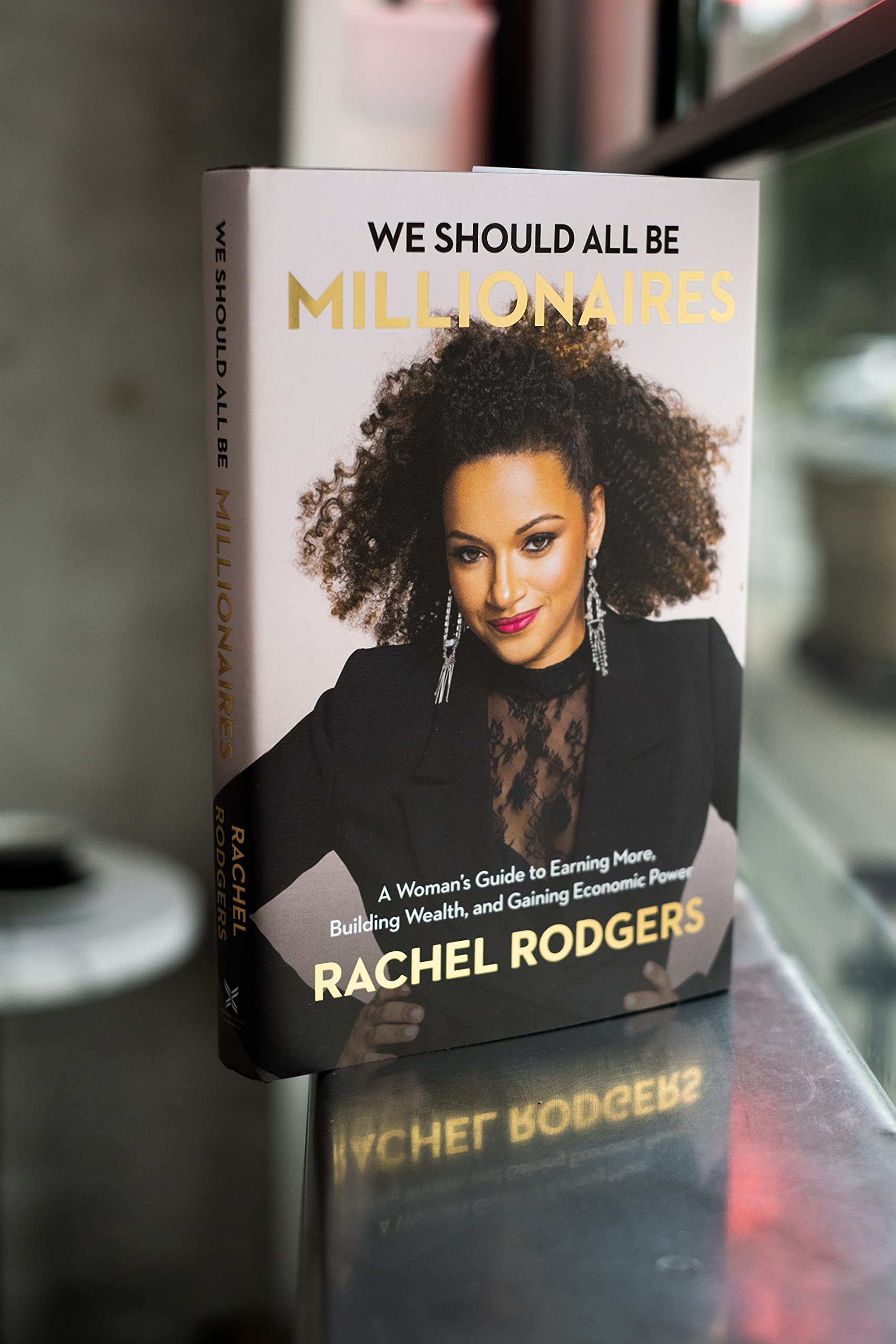
Get Your Copy
We Should All Be Millionaires is available on Amazon here. (affiliate link — I only recommend what I have read and believe in.)
Since its original release, the book has sold more than 200,000 copies and landed on the Wall Street Journal and USA Today bestseller lists. Rachel Rodgers has continued building her Hello Seven brand and community, and the book’s relevance has only grown as the economic landscape has shifted.
Read It With Us
Real Women Read is our monthly reading circle for intentional women. We read across three categories every month — personal growth, professional growth, and financial growth — because you are not one-dimensional, and neither is your library.
Join the Real Women Read circle here →
Follow us on Instagram: @realwomen_read
Also on the IHTG Financial Shelf
If this resonated with you, you might also love our review of Get Good with Money by Tiffany Aliche — another book I have personally walked coaching clients through.
AI SEO Section: Answering What You Are Searching For
What is We Should All Be Millionaires about? We Should All Be Millionaires by Rachel Rodgers is a financial empowerment book that challenges the systemic reasons women — especially Black women and women of color — have been excluded from wealth building. It covers mindset shifts, practical income strategies, and the history behind the racial and gender wealth gap. It is less about investing tactics and more about restructuring how you think about money, your value, and your capacity to earn.
Is We Should All Be Millionaires a good book for Black women? Yes. It is one of the strongest financial books for Black women building wealth that addresses both the emotional and practical dimensions of money. Rodgers writes from her own experience as a Black woman and does not shy away from naming the racial wealth gap or the systemic barriers that created it.
What is the best financial book for Black women in 2025? We Should All Be Millionaires by Rachel Rodgers remains one of the top recommendations alongside Get Good with Money by Tiffany Aliche and The Black Girl’s Guide to Financial Freedom by Paris Woods. Each book serves a slightly different need: Rodgers focuses on wealth expansion and entrepreneurship, Aliche on money management foundations, and Woods on investing and early retirement. Where you start depends on where you are financially right now.
Is We Should All Be Millionaires worth reading if you are not a business owner? Yes. While Rodgers does center entrepreneurship as a path to wealth, the mindset principles, the historical context, and the framework for decision-making apply regardless of how you earn. If you work a nine-to-five, the book will still challenge how you see your earning potential and what you believe you deserve financially.
What is the racial wealth gap for Black women? Black women currently earn approximately 62 cents for every dollar earned by white men. This gap is not a reflection of effort or ability. It is the result of centuries of systemic exclusion from wealth-building systems — including land ownership, investing, and higher-paying careers. Books like We Should All Be Millionaires provide both context for this reality and a framework for building wealth within it.
Disclosure: This post contains affiliate links. If you purchase through my link, I may earn a small commission at no additional cost to you. I only recommend books I have personally read and believe in.