Last Updated on 6 months ago
Let me ask you something honest. When is the last time you actually felt good about your money? Not just relieved that a bill cleared. Not just grateful the account did not go to zero. Actually good — clear, confident, in control?
For a lot of us, that feeling is not something we have experienced yet. And if you have ever Googled “how to start over financially” at eleven o’clock at night, wondering where all the money went and how everyone else seems to have it figured out — this is for you.
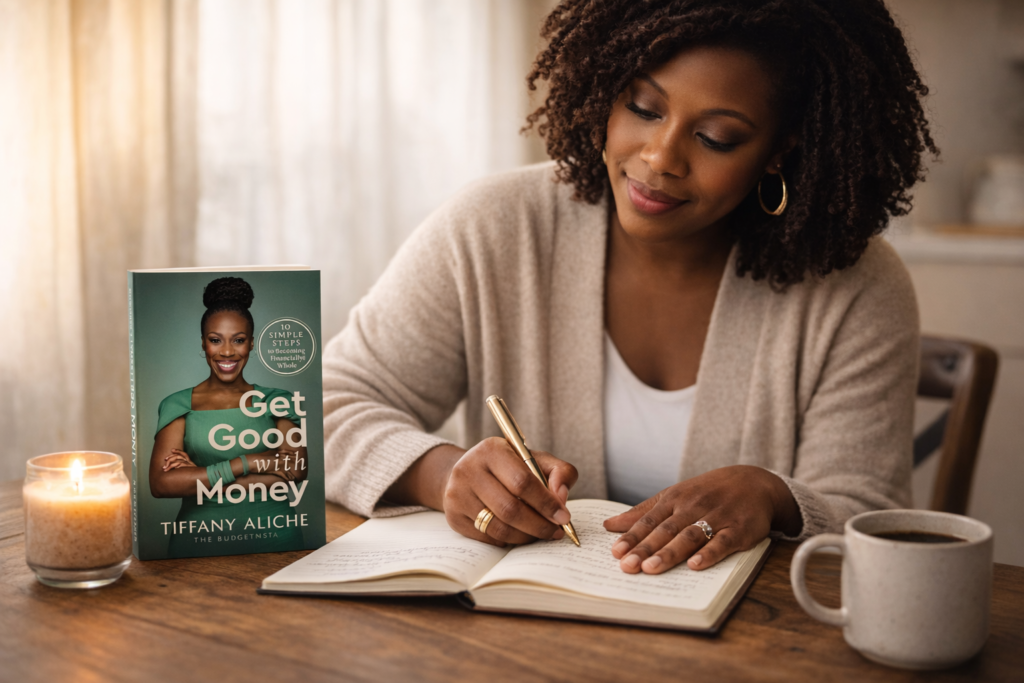
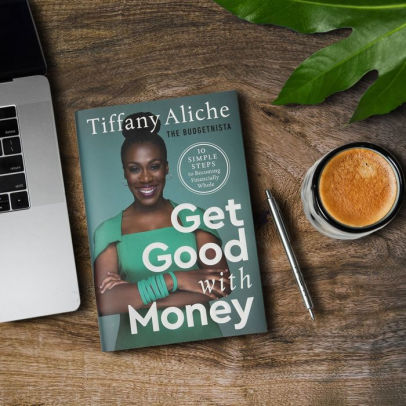
Get Good With Money by Tiffany Aliche — better known as The Budgetnista — is one of the most honest, practical, and shame-free financial books I have ever read. It made the Real Women Read monthly list, and it earned every star.
Who Is Tiffany Aliche — And Why Her Voice Matters
Before we get into the book, let me tell you why Tiffany Aliche is someone worth listening to.
She was not always The Budgetnista. She was a preschool teacher in Newark, New Jersey, with a healthy savings account, doing everything right — until the 2008 recession hit, she lost her job, and a dishonest financial advisor wiped out what she had worked to build. She found herself in deep debt, without a home, and starting completely over.
What she did next is what makes her credible. She did not just dig herself out. She turned the entire process into a system, shared it freely, and has since helped more than two million women worldwide collectively save and pay off hundreds of millions of dollars in debt.
She was the first Black woman to appear solo on the cover of Money Magazine. She co-hosts the Webby Award-winning Brown Ambition podcast. She even got financial literacy written into law in New Jersey, making financial education mandatory in middle schools statewide.
Sis has receipts. Real ones.
What Get Good With Money Is Actually About
This is not a “stop buying coffee and save your pennies” book. Tiffany does not have time for that, and frankly, neither do you.
Get Good With Money is built around her concept of financial wholeness — the idea that being good with money is not just about having more of it. It is about having a complete, healthy relationship with every part of your financial life. She breaks that down into ten steps, each one representing a percentage of your total financial health, building until you reach 100% financially whole.
Here is what those steps cover:
Budgeting and the Noodle Budget. This is the concept that stopped me. Your Noodle Budget is the absolute minimum you need to survive — the bare bones number if everything went sideways. Not to live there, but to know your floor. That clarity alone changes everything about how you make decisions.
Saving with intention. Not just building an emergency fund, but understanding what you are saving for and why. She breaks down short-term, mid-term, and long-term savings goals in a way that actually makes sense.
Debt — how to pay it off without losing your mind. She does not shame you for having it. She gives you a plan for getting out of it.
Credit — understanding it like a GPA. She compares your credit score to a grade point average — a number that reflects your financial behavior over time and can always be improved. That reframe alone takes so much fear out of it.
Investing and retirement. She covers the basics without making you feel like you need a finance degree to participate. This section is worth the price of the book for any woman who has been putting off thinking about retirement because it feels too complicated or too far away.
Net worth, income, and insurance. All covered. All in plain language. All without judgment.
The Thing That Makes This Book Different
A lot of financial books are written for people who already have a foundation. They assume you have disposable income to invest, no major debt weighing on you, and a family history of talking openly about money.
That is not most of us.
What Tiffany understands — because she has lived it — is that many of us are starting this journey carrying shame, confusion, and the weight of a financial education we simply were not given. She does not skip over that reality. She meets you right in it, without making you feel stupid for being there.
Readers consistently describe it as feeling like advice from an older sister who has already made the mistakes and is now walking you through the path she wished she had. That is exactly how it reads.
One honest note: this book is more practicum than casual reading. There are worksheets, checklists, and action steps woven throughout every chapter. My recommendation — and the one I have given to women in my community since the first time I read it — is to give yourself the full month with it. Read it as your only book that month so you can actually do the work as you go. When I first read it alongside two other books, I captured maybe ten percent of what it could have given me. Do not make my mistake.
Who This Book Is For
This book belongs in your hands if:
- You feel like money is something that happens to you instead of something you direct
- You have debt and you are not sure where to even start
- You have been meaning to figure out investing but keep putting it off because life keeps happening
- You want to build real financial habits but every other resource has felt too complicated, too corporate, or simply not made for someone in your situation
- You are in a season of transition — career change, fresh start, new chapter — and you want your finances to reflect where you are going, not where you have been
Get Your Copy
Get Good With Money is available on Amazon here. (affiliate link — I only recommend what I have personally read and believe in.)
Since its release, this book has reached millions of readers across all formats. Tiffany has continued building the Live Richer ecosystem with courses, challenges, and community resources that extend well beyond the book itself. If you read it and want to go deeper, her website at thebudgetnista.com is a strong next step.
Read It With Us
Real Women Read is our monthly reading circle for intentional women. Every month we read across three categories — personal growth, professional growth, and financial growth — because you are a whole woman and your library should reflect that.
Join the Real Women Read circle here →
Follow along on Instagram: @realwomen_read
Also on the IHTG Financial Shelf
If Get Good With Money gave you the foundation, our review of We Should All Be Millionaires by Rachel Rodgers is the natural next read. It picks up where Tiffany leaves off and takes you into wealth expansion and building income you actually keep.
FAQ
How do I start over financially when I feel completely behind? The first step is getting clear on where you actually are — not where you wish you were. Tiffany Aliche’s Get Good With Money walks you through this with her concept of the Noodle Budget: identifying the absolute minimum you need to survive so you have a real financial floor to build from. From there, she takes you through ten progressive steps covering budgeting, debt payoff, savings, credit, and investing — all in plain language and without shame. Starting over financially is less about having money and more about having a clear system. This book gives you both.
What is the best book to read if you want to start over financially? Get Good With Money by Tiffany Aliche is one of the most highly recommended books for women who feel financially behind or are rebuilding from scratch. It is practical, inclusive, and written without the condescension that makes many personal finance books feel inaccessible. It covers every dimension of financial health across ten steps and includes worksheets and action items so you are not just reading — you are actually doing the work.
What is the Noodle Budget in Get Good With Money? The Noodle Budget is Tiffany Aliche’s term for the minimum monthly amount you need to cover your absolute basic living expenses — your financial floor if everything went sideways. She calls it the Noodle Budget because it represents a bare-bones, ramen-level of spending. The purpose is not to live there permanently but to know your number so every financial decision you make above it comes from a place of clarity rather than anxiety.
Is Get Good With Money good for beginners? Yes. It is specifically designed for women who feel overwhelmed by money, do not know where to start, or have felt excluded by traditional financial advice. Tiffany Aliche spent ten years as a preschool teacher before becoming The Budgetnista, and her ability to break down complex concepts into simple, actionable language is what sets this book apart. Readers consistently say it is the first financial book that made them feel like they could actually do this.
How is Get Good With Money different from We Should All Be Millionaires? Both are excellent financial books for women, but they serve different starting points. Get Good With Money by Tiffany Aliche focuses on building a complete financial foundation — budgeting, debt, credit, savings, and beginner investing. It is ideal if you are rebuilding, starting from scratch, or want to get your financial fundamentals in order. We Should All Be Millionaires by Rachel Rodgers focuses on expanding your income, shifting your wealth mindset, and building toward seven figures. If you are working on your foundation, start with Tiffany. If you are ready to scale, move to Rachel. Ideally, read both.
Disclosure: This post contains affiliate links. If you purchase through my link, I may earn a small commission at no additional cost to you. I only recommend books I have personally read and believe in.