Last Updated on 6 months ago
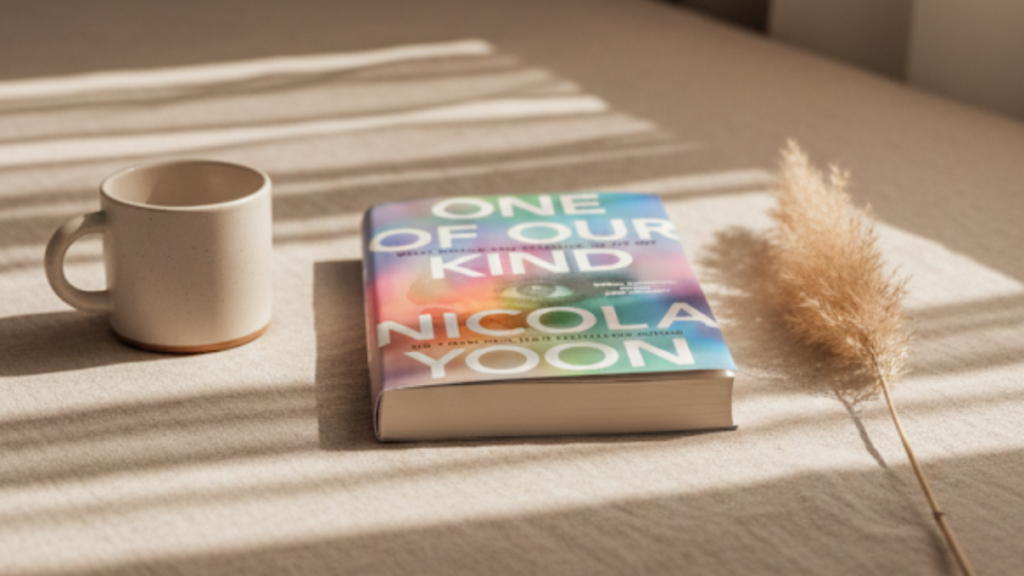
This One of Our Kind book review is a spoiler-free reflection on a novel that quietly asks big questions about Black identity, safety, freedom, and perception. Some books are easy to describe. This one wasn’t — and that’s part of why I enjoyed it.
Reading One of Our Kind made me feel deeply curious. Not in a fast-paced, adrenaline-filled way, but in a quieter, more reflective way. My interest stayed piqued because the story felt layered — like it was constantly asking me to shift my perspective while I was reading.
What I appreciated most is that it didn’t feel typical. It didn’t hand me a single lens and say, look here. Instead, it felt like an invitation — sometimes even a challenge — to hold multiple perceptions at once. That kind of reading experience slows you down. It makes you think.
And I enjoyed that.
The Questions This Book Stirred
Without giving anything away, this book stirred questions around identity, freedom, and trauma.
It made me reflect on what it actually means to be free — not just externally, but internally. How much of our understanding of freedom is shaped by past experiences? How much of it is shaped by fear, protection, or survival?
Those questions lingered with you long after the book is closed, which is often the mark of a story doing more than entertaining.
What This Book Explores (Without Telling)
At its core, One of Our Kind explores layered questions about Blackness, safety, freedom, and identity in America.
It quietly asks what it means to be Black in this country — and whether the definitions we’ve inherited are freeing, protective, or quietly restrictive. The book examines how safety is imagined, how freedom is negotiated, and how wealth intersects with both in complicated, sometimes uncomfortable ways.
What makes this exploration compelling is that it’s rooted in perception. The story doesn’t offer a single truth or moral. Instead, it asks the reader to sit with multiple interpretations at once. You may find yourself turning pages not just to see what happens next, but to understand how you feel about what’s unfolding.
That’s what gives the story staying power.

Why This Is a Real Women Read Pick
This is an incredibly conversation-worthy book.
It’s uncomfortable in a useful way — the kind of discomfort that opens dialogue instead of shutting it down. Because the story is so grounded in perception, every reader may experience it differently. One person may love it. Another may feel challenged by it. Those differences are where the richest conversations live.
For Black women especially, this book creates space to reflect on how we move through the world, how we define freedom for ourselves, and how those definitions are shaped by lived experience.
That’s exactly why it’s our first Real Women Read selection of the year.
If you enjoy books that stir reflection, invite honesty, and stay with you after the final page, this one will meet you there.
If you’d like to read along with us this month, I invite you to join the Real Women Read mailing list, where we’ll share reflections, discussion prompts, and updates throughout the month — gently and without pressure.
I can’t wait to hear what this book brings up for you and to experience the conversation together.