Last Updated on 4 months ago
Editor’s Note: This Women That Rock profile was originally published on January 22, 2015, as part of I Hear That Girl’s music series spotlighting women artists worth paying attention to. It has been updated for clarity, context, and current relevance as part of our Women That Rock Revisited series for Black Music Month.
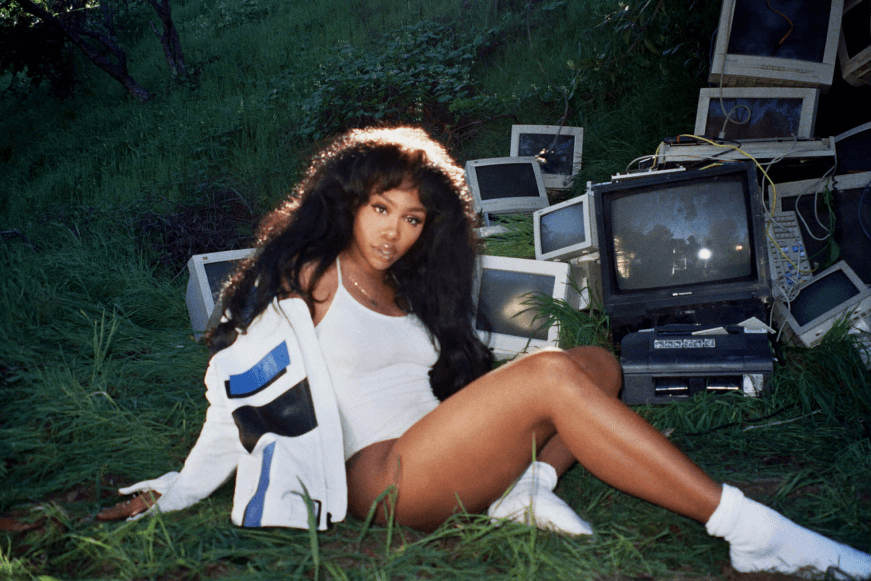
Before SZA became one of the defining voices of modern R&B, I knew there was something different about her.
That was part of the beauty of her from the beginning.
When I first introduced SZA to I Hear That Girl readers back in 2015, I was drawn to the way she brought together alternative R&B, neo-soul, hip-hop, and a kind of airy, emotional honesty that did not sound like everything else on the charts at the time.
And looking back now, I still hear what I heard then.
SZA was never just making music to sound pretty.
She was making music that felt like a woman trying to understand herself in real time.
That is why this Women That Rock profile deserves to be revisited. Because before Ctrl, before SOS, before “Kill Bill,” before “Snooze,” before LANA, there was already something in SZA’s music that felt honest, complicated, and deeply human.
She was already giving language to the soft, messy, uncertain parts of becoming.
Who Is SZA?
Born Solána Imani Rowe in St. Louis and raised in Maplewood, New Jersey, SZA came into music with a sound that was hard to define and easy to feel.
When I first wrote about her, I mentioned that she was the first female artist signed to Top Dawg Entertainment, the label known for artists like Kendrick Lamar, ScHoolboy Q, Ab-Soul, and Jay Rock. That detail mattered then, and it still matters now.
Because SZA entered a space that was heavily associated with rap, lyricism, and a very particular kind of masculine energy, yet she brought something completely her own.
She did not try to harden herself to fit the room.
She brought softness, moodiness, spirituality, and vulnerability into it.
And that is part of why her career has become so meaningful.
The Early Sound: See.SZA.Run, S, and Z
Before the massive albums and arena moments, SZA was building her foundation through early projects that introduced her layered sound and point of view.
Her debut EP, See.SZA.Run, was released in 2012, followed by S in 2013. Those projects helped shape the world she was creating: dreamy, textured, emotional, and sometimes difficult to categorize. There were traces of R&B, soul, hip-hop, alternative music, and something spiritual floating underneath it all.
Then came Z in 2014, the project I highlighted in the original piece.
At the time, Z helped introduce SZA to a wider audience. Songs like “Child’s Play,” featuring Chance the Rapper, and “Babylon,” featuring Kendrick Lamar, gave listeners a clearer view of her range.
“Child’s Play” had a soft, nostalgic quality. It felt playful on the surface, but underneath it carried that familiar SZA tension: memory, longing, insecurity, imagination, and emotional honesty all sitting together.
“Babylon,” on the other hand, leaned darker and moodier. The production created space for SZA’s voice to float, question, and confess. Kendrick Lamar’s feature added weight, but SZA’s presence remained the center.
Even then, she was not performing perfection.
She was telling the truth.
From Alternative R&B to Emotional Language
One of the reasons SZA’s music connected so deeply is because she never sounded like she was trying to be the most polished person in the room.
Like Victoria Monét, SZA’s journey reminds us that Black women in music are often shaping the sound long before the world fully names their impact.
She sounded like someone processing.
That is what made her different.
Her songs often felt like journal entries set to music: vulnerable, contradictory, sensual, insecure, self-aware, and still searching. She could be soft and sharp in the same breath. She could sound unsure of herself while still being completely in control of the feeling.
That emotional complexity became one of her signatures.
By the time Ctrl arrived in 2017, SZA had become the voice of a very specific kind of womanhood: the woman learning herself, questioning herself, loving badly, healing slowly, and trying to stop performing cool when she was actually hurting.
Ctrl did not just introduce SZA to more listeners.
It made a lot of women feel seen.
The album gave language to insecurity, desire, body image, comparison, heartbreak, and the ache of wanting to be chosen while still trying to choose yourself. It was messy, but it was not careless. It was vulnerable, but it was not weak.
It was a mirror.
And for many women, especially Black women who had been taught to keep it together, that mirror mattered.
The SOS Era and the Power of Expansion
If Ctrl was the sound of a woman trying to understand herself, SOS was the sound of a woman expanding beyond every box people tried to place her in.
Released in 2022, SOS pushed SZA even further. The album moved through R&B, pop, rap, rock, and acoustic textures while still keeping her emotional world at the center. Songs like “Kill Bill,” “Snooze,” “Nobody Gets Me,” and “Good Days” showed just how wide her reach had become.
And the world responded.
SOS became a major commercial and cultural moment, earning SZA nine Grammy nominations for the 2024 Grammys. She entered that year as the most-nominated artist, a powerful reminder that the sound once considered too alternative, too moody, or too hard to categorize had become central to popular music.
Then came SOS Deluxe: LANA, released in December 2024. It expanded the world of SOS even further, giving listeners more of the softness, contradiction, confession, and emotional texture that have become part of SZA’s signature.
What is beautiful about this stage of her career is that SZA did not have to abandon her complexity to reach more people.
She reached more people because of it.
Why SZA Belongs in the Women That Rock Archive
Black Music Month is the right time to revisit SZA because her career reminds me that Black women’s emotional lives are worthy of depth, experimentation, and full creative expression.
SZA did not become powerful by pretending to have it all figured out.
She became powerful by letting the questions live in the music.
That is part of why her work resonates so deeply with women in transition. Her songs often sound like the private thoughts you have before you are ready to say them out loud. The doubt. The desire. The comparison. The softness. The fear. The ache of becoming someone new while still grieving who you used to be.
That matters.
Because becoming is not always graceful.
Sometimes it is emotional.
Sometimes it is confusing.
Sometimes it is one long conversation with yourself about what you want, what you deserve, and what you are finally ready to release.
SZA’s music gives that process a soundtrack.
And that is exactly why I wanted to revisit this profile. I heard something early. I heard the texture, the mood, the genre-bending, and the quiet emotional power before the rest of the world fully caught up.
Now, all these years later, I can say it clearly:
SZA was never just the alternative R&B girl.
She was becoming one of the most important emotional storytellers of her generation.
Listen Next
If you are revisiting SZA’s music, start with:
- “Child’s Play”
- “Babylon”
- “The Weekend”
- “Broken Clocks”
- “Good Days”
- “Kill Bill”
- “Snooze”
- “Saturn”
- “30 For 30”
Then go back and listen again with her full journey in mind.
Because once you understand the becoming, the music hits different.
Women That Rock Revisited
This profile is part of I Hear That Girl’s Women That Rock Revisited series, where we return to our music archives and honor the Black women artists whose voices, stories, and creative risks deserve to be remembered in full.