Curiosity Meets Creation
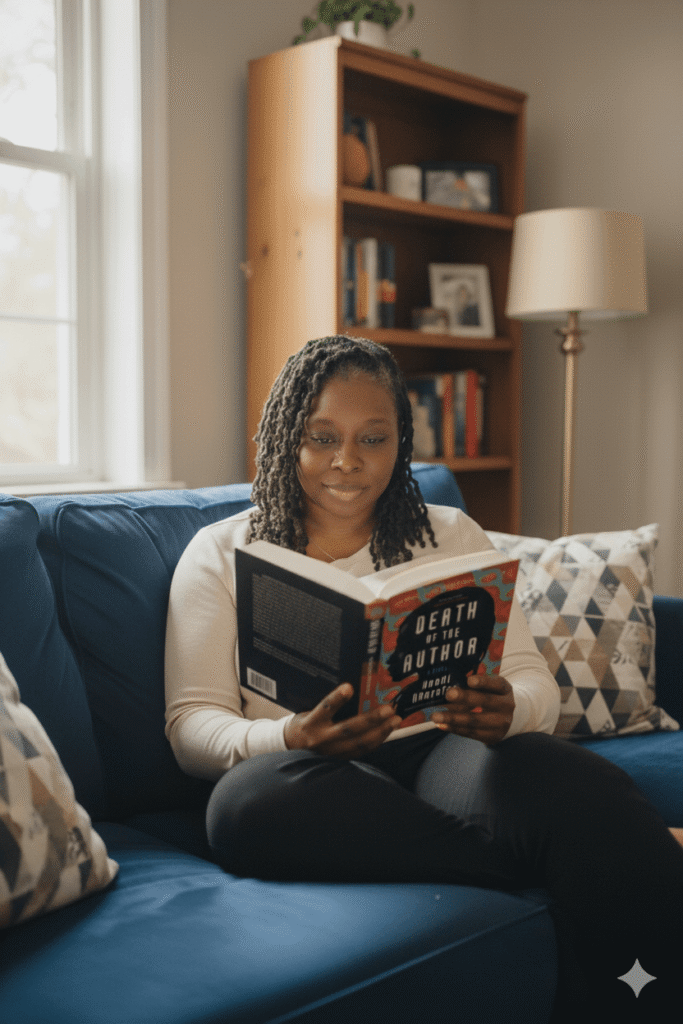
I recently finished reading Death of the Author, and let me tell you—this book wrecked me in the best way possible. As a creative who lives at the intersection of storytelling and technology, this Death of the Author book review isn’t just about a story—it’s about what it means to truly feel, create, and be human in the age of AI.
Many artists today feel threatened by AI, fearful that the brush, the pen, or the camera will be replaced by an algorithm. But I see AI differently. It’s a tool—one that can help us stretch our imagination, not shrink it. So when I cracked open this book, I wanted to see how the author would explore that tension: the space between art and automation, between creation and control.
The Story Beneath the Story
Without spoiling too much, Death of the Author follows Zelu and Ankara—two characters intertwined in a world where creativity has been re-engineered. Their story isn’t just about technology; it’s about identity, purpose, and what happens when we start outsourcing our humanity.
The book feels eerily familiar. In an age where every thought can be optimized, every emotion curated, and every post polished, we’re all living some version of Zelu’s story. We’ve automated so much of life that we forget what it feels like to simply experience it.
What struck me most was that the story never paints technology as the villain. Instead, it holds up a mirror. It asks, What are we losing when we stop feeling?
The Line That Broke Me
When I reached the final pages, I had tears in my eyes. The sentence that cracked me open was simple:
“Creativity meant experiencing, processing, understanding human joy and pain.”
That line hit like truth spoken aloud. Because isn’t that the real art of living? We chase the mountaintop moments—the highlight reels—and rush past the valleys. But creativity, healing, and even joy are found in the valleys too.
In this Death of the Author book review, I found myself reflecting on my own journey. The highs and lows I wanted to skip past. The heartbreaks, the disappointments, the slow rebuilds. Those are the moments that formed my artistry and my resilience. Yet for years, I treated them like glitches to be edited out of the story.
We’ve become so good at automating life that we’ve automated our feelings too. We fast-forward through the hard parts and filter the rest. But when we do that, we lose something sacred: the essence of the experience itself. And that essence—that feeling—is the birthplace of creativity.
The Cost of Curation
Our society—whoever the fuck that is—has built an entire culture around control. Control your image. Control your narrative. Control your emotions so you don’t make anyone uncomfortable.
Death of the Author exposes that control for what it is: fear. Fear of being messy. Fear of being misunderstood. Fear of being real.
We praise “authenticity,” yet punish people when it’s not pretty. We demand vulnerability but only if it fits the brand. We want truth, but not the kind that makes us sit in discomfort. If you’ve ever questioned what creativity really means, this book review will hit home.
Reading this book reminded me that creation is inherently chaotic. It’s supposed to be messy. It’s supposed to challenge the boundaries we set for ourselves and each other. That’s what makes art powerful—it tells the truth even when we can’t.
What “Death of the Author” Teaches Us About Feeling Again
Through Zelu and Ankara’s journey, I was reminded that freedom doesn’t come from perfection. It comes from permission—the permission to be, to feel, to live without trimming the edges.
Their story is about rediscovering humanity in a world that wants to code it out. It’s about finding beauty in the ride, even when it’s wild and unpredictable.
For me, that message couldn’t have arrived at a better time. As I grow—personally, spiritually, professionally—I’m learning that peace doesn’t come from skipping the struggle. It comes from feeling it fully and trusting that it’s shaping me into who I’m becoming.
That’s the same freedom Zelu and Ankara found: the realization that life isn’t meant to be edited. It’s meant to be lived.
The Beauty of the Ride
There’s a line from my own journal that echoes this book’s heartbeat:
“We miss the beauty of the ride when we keep our eyes shut tightly through the highs and lows.”
That’s exactly what Death of the Author reminded me. We can’t create meaning if we refuse to experience life. The grief, the joy, the failures, the forgiveness—all of it feeds the work.
For my readers, especially the women in transition who are redefining themselves, this story is your permission slip. Let yourself feel again. Don’t just survive the ride—see it.
Maybe Death of the Author isn’t really about death at all. Maybe it’s about resurrection—the rebirth of the artist within all of us when we stop curating and start living.
💕 Loved this reflection? You can grab Death of the Author and check out more of my favorite reads in my Amazon Book Picks store. Every title there feeds your spirit and your creativity.